Electric trucks and Intermodality
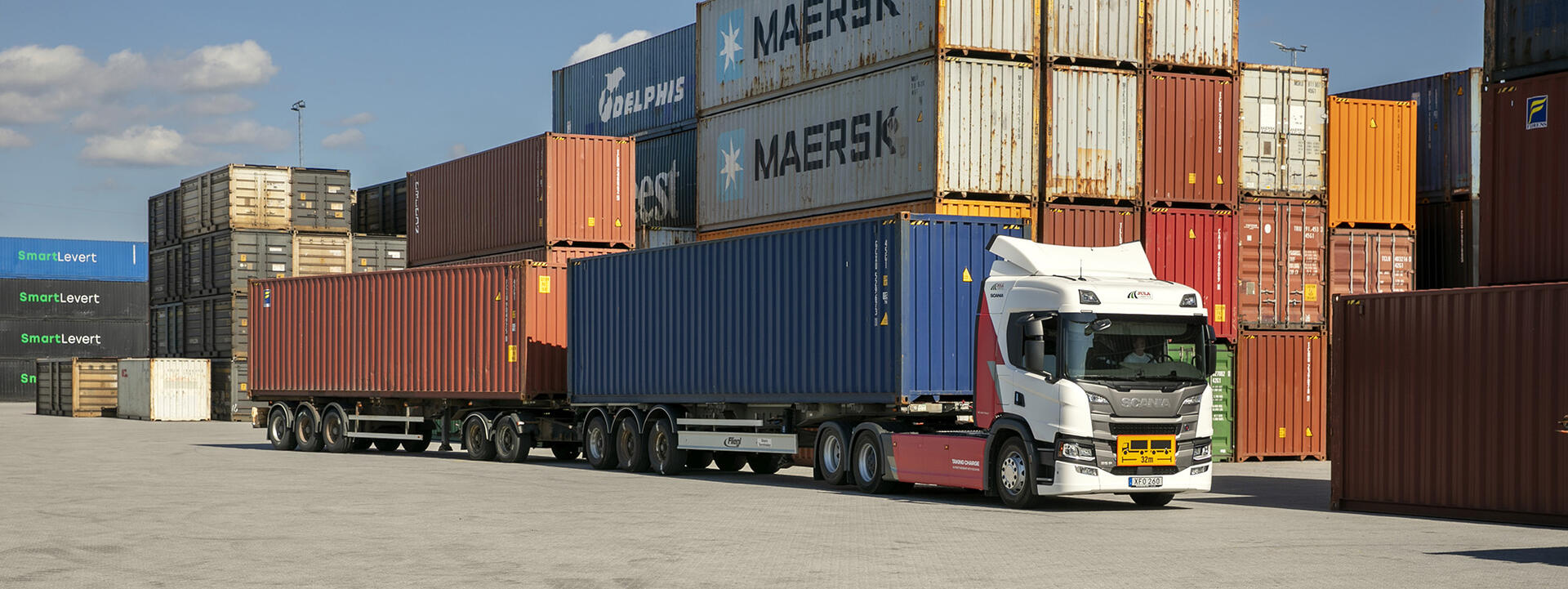
The project has prepared for a large-scale implementation and operation of electric trucks in connecting transports in intermodal logistics chains. Two electric trucks in a High Capacity Transport-based regional and commercial logistics flow have been operated and evaluated from a business and systems perspective.
The aim of the project was to build the knowledge needed for a rapid scale-up of intermodal transport with electric HCT vehicles in a regional flow. To enable this, the critical knowledge areas of business models and system design must be developed and coordinated. In the project, experiences from two vehicles in real operation together with co-creation between the project actors have produced a system that is financially viable and functional to solve transport needs, as well as being an inspiration for other intermodal systems.
Initial calculations show that it is very appropriate to start with the largest electric trucks within this niche as the environmental benefit per truck can be very large while the cost of electrification is low since only medium-sized batteries are needed.
Project goals:
- A three-year trial where two heavy electric trucks are put into commercial operation, collecting real-time data to enable optimization of the vehicle and logistics flow. This creates the conditions to prepare for the growing large-scale electrified regional HCT system in connection with intermodal transport.
- Describe strategies for charging and scheduling electric truck use that will demonstrate how a large-scale system should be built and operated to meet the many different conflicting demands of real-world operations in a cost-effective manner.
- Calculate and summarize today's environmental impact linked to CO2 emissions from the haulage company's truck fleet and show emission savings when introducing electric trucks to the fleet at different levels.
The benefits of intermodal solutions are limited by the use of diesel trucks in connecting transport, with the consequent greenhouse gas emissions. HCT on the road, linked to intermodal transport, is a way to increase transport efficiency in the transport chain and reduce emissions without eliminating them. If the hypothesis that this transport segment is suitable for the implementation of electric trucks is validated, the success can be quickly copied and scaled based on local conditions in other intermodal systems in the country, with a saving of carbon dioxide emissions of up to 50,000 tons CO2/year in addition to the maintained transport efficiency.
The project group has described and developed the business model, adapted the various subsystems such as charging, vehicles and transport assignments, and documented changes in relationships between actors to understand the effects the changes create in the transport system. An important part of the project was to develop the system technically and commercially.
Results
Two electric HCT crews have been deployed in a regional commercial logistics flow for operation and evaluation from a business and system perspective. The studied system has the potential to electrify two-thirds of the connecting truck transports in the short term and all within a couple of years, corresponding to annual emission reductions of 1,500-2,200 tons of CO2.
The replication possibilities for other combined terminals are considered very good and in an upscaled format for all of Sweden's approximately 15 larger combined terminals, there is therefore potential for emission reductions of 20,000-45,000 tons of CO2 per year.
Challenges to the electrification transition include high investment costs for trucks, access to grid capacity, and the need to build experience among drivers and planners on how to best use electric trucks. Electrification can also be hampered if ownership and operation of the terminal, property, chargers, and trucks are spread across multiple parties. Finally, TCO is still a bit high, but is expected to become competitive soon and may even be so today when trucks are operated extensively, for example in two shifts.
The project has developed a graphical planning aid and a model that describes different charging strategies and their cost-effectiveness, which helps hauliers analyze their needs and choose a sustainable charging strategy. Knowledge from the system model will also be important for actors in the charging area and for vehicle manufacturers.
See all the results and recommendations in the final report below.
Project partners
CLOSER at Lindholmen Science Park (coordinating), Chalmers University of Technology , Gothenburg School of Economics, University of Gothenburg , Jula and Scania .
FOI project
2021.4.2.3
Contact